Aurélia Durand on crafting a language of joy
What stops you first is the colour. All of it intentional, all of it placed. Aurélia Durand's illustrations are recognisable within seconds. That kind of visual consistency is harder to build than it looks.
The Paris-born, Copenhagen-based illustrator draws from her French-Ivorian heritage, but the work never reduces to a single reference. Colour is the language. Joy is the argument. Figures are bold, present, and unapologetically alive — people who take up space on the page the way they deserve to take up space in the world.
Durand has built that visual world across books, murals, and campaigns seen globally. The scale changes. The voice doesn't.
Follow Aurélia
In Conversation
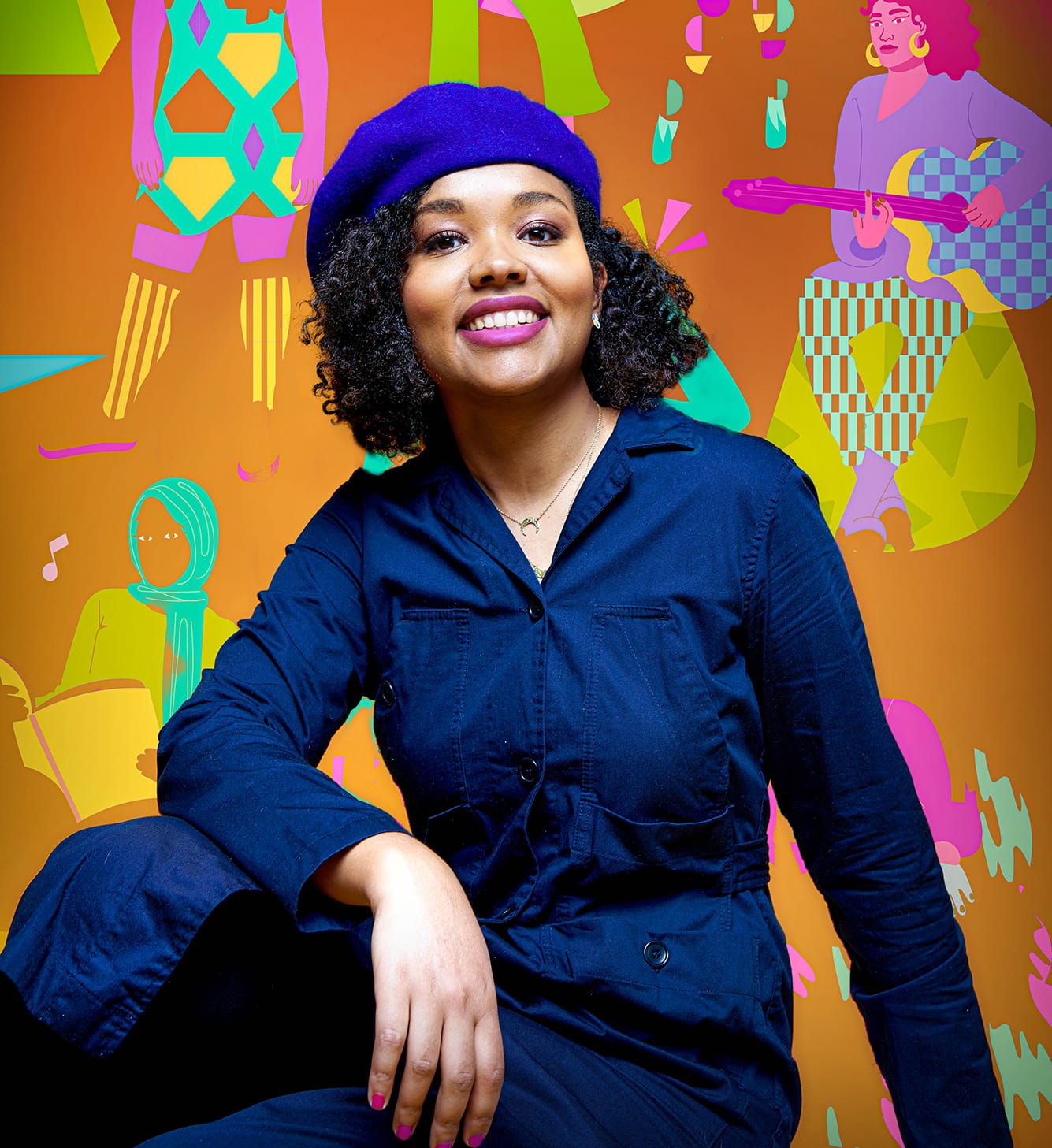
Tell us about your relationship to joy, color, and empowerment. What first drew you to portraiture as a visual language?
Colour has become my language because I see it as a way to affirm presence and claim space. Drawing portraits felt natural, as it enables me to celebrate faces, bodies, and attitudes of people often excluded from mainstream art.
Through my work, I aim to share strength, beauty, and pride, reminding us that joy can serve as a form of resistance.
You’ve described your art as a celebration of diversity. How did your upbringing in France and your Ivorian heritage shape that perspective?
Through my work, I reclaim my African roots and celebrate my diversity. Being mixed-race, both white and Black, my art is a bridge. I grew up in various places in France and on Réunion Island, immersed in a household shaped by Ivorian and French cultures. These multicultural experiences taught me that identity isn’t a single hue but a spectrum. As a child, I rarely saw people like myself in books or on television, so I started creating the images I needed through my art education.
My mixed heritage became my source of strength, helping me heal childhood traumas caused by feeling excluded, like a stranger, because of my hair, skin, and mother. Overcoming these childhood wounds took courage, especially to pursue art. From age three to eighteen, I struggled with shame about my appearance, feeling I wasn’t truly white or black enough. Living in Denmark deepened this wound, making me realize how much shame I carried. It made me shy, introverted, and pessimistic, but I wanted to redefine myself with pride, strength, and acceptance of my hair, roots, and colors. Art became my refuge, a space to turn this painful identity crisis into something vibrant and unapologetic.
Living abroad broadened my horizons: France taught me resilience, while Denmark challenged my sense of identity and belonging. Both experiences fostered independent thinking and unique artistic expression. Over time, I learned through failures and experiments, deepening my understanding of my purpose.
Art now reflects my journey, exploring identity, community, joy, and resilience. I depict people as I wish the world would see them — proud, colourful, and empowered.
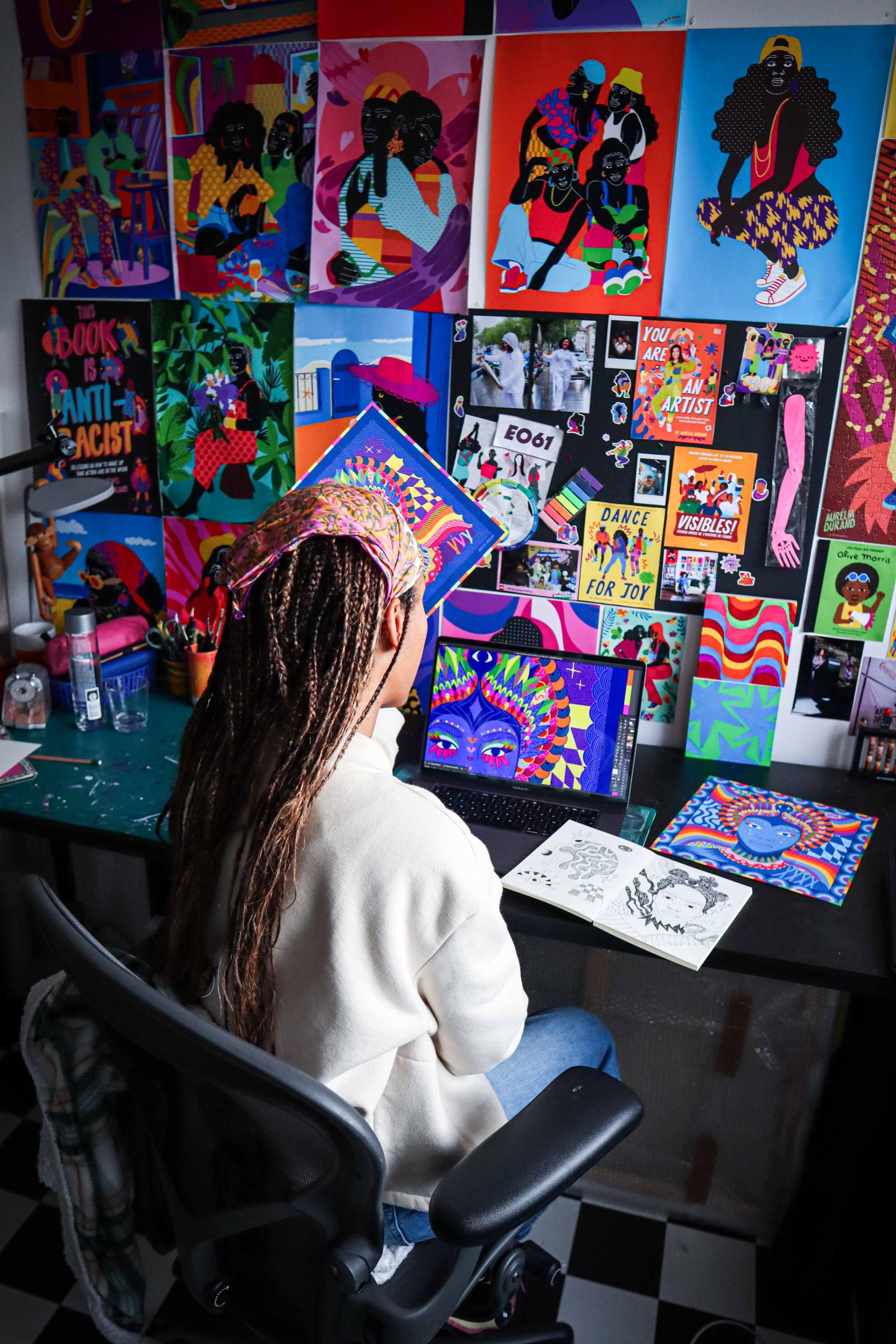
Your style feels instantly recognisable. How did you develop it, and how do you keep it evolving?
In a society that prizes uniformity, my art needs to challenge and stand out. I use bright colours to emphasise Blackness and ensure visibility, colours designed to disrupt, challenge and assert presence.
Black has always been central to my work — not as a void, but as a space containing every shade, a metaphor for Afro-heritage: multi-layered, intricate, and limitless.
From this foundation, I develop a palette of vibrant hues that communicate with each other — purple, yellow, blue, green, pink — whose energy becomes palpable when they converge, like an elusive rhythm. I rely on instinct when creating; color guides me before any ideas or theories. This is how I convey emotion through movement.
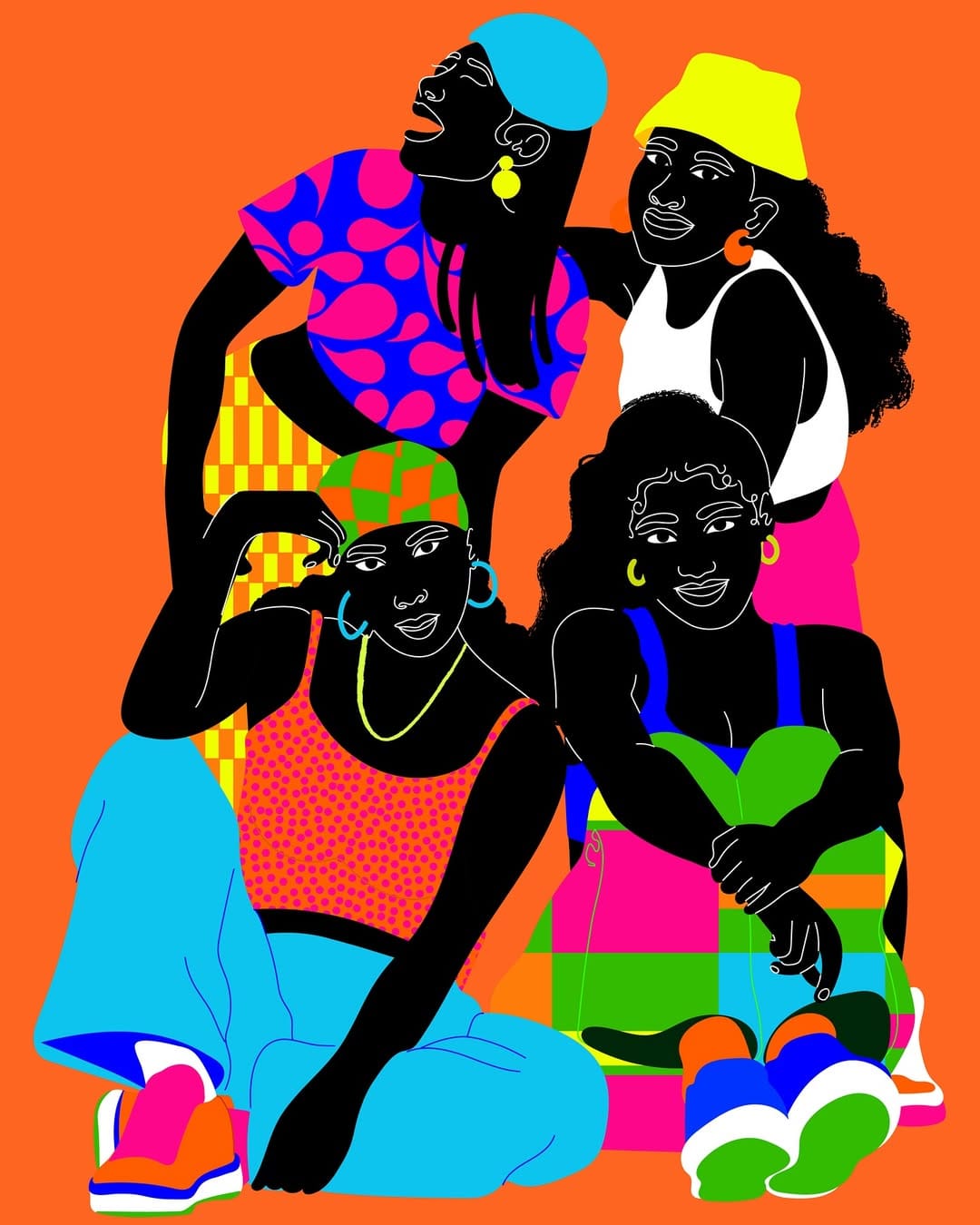
My distinctive style is characterised by bold colour blocks and striking compositions that convey energy and clarity. Black, often considered a non-colour, serves as my base, amplifying the vitality of surrounding hues. The white lines I incorporate are my signature, spontaneous, hand-drawn marks that embody joy, power, and soul.
You’ve collaborated with brands and institutions worldwide. What do you look for in a partnership?
I choose collaborations carefully. What I look for is resonance — a shared sense of respect, authenticity, and openness. A successful partnership is one where I can express myself freely, without being asked to soften my message.
I want every project to have meaning: to inspire, to educate, or to bring beauty with purpose.
As a French-Ivorian artist living in Denmark, what has moving between cultural worlds taught you about belonging?
Living between cultures taught me that belonging is not a place — it’s a feeling. I feel at home wherever I can be my true self. Denmark gave me distance and perspective; it allowed me to observe, to understand, and to build bridges.
Representation, for me, is precisely that: creating connections between worlds and showing that our multiplicity is our strength.
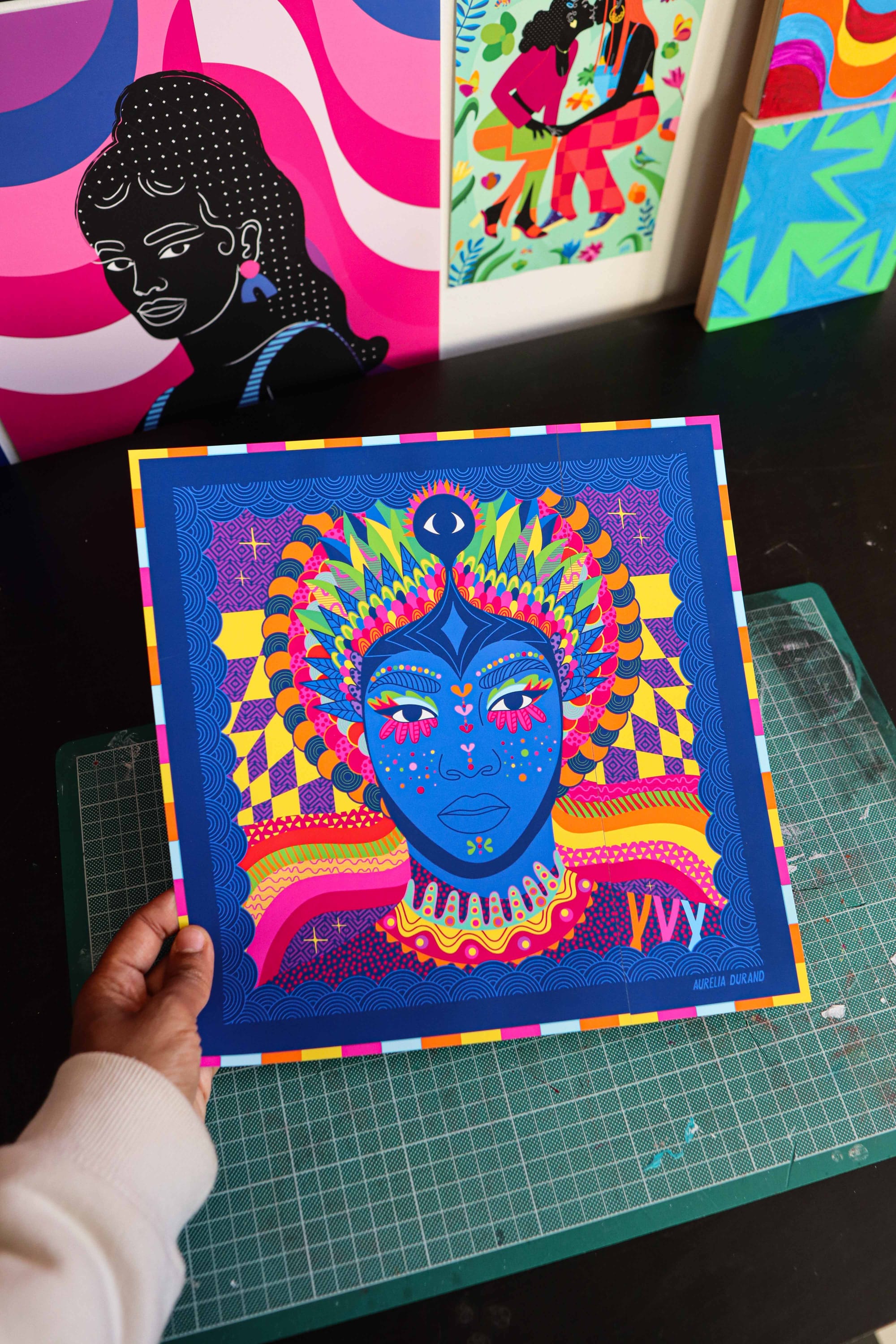
You’ve created books, murals, and digital campaigns seen across the globe. Which project challenged you the most?
This Book Is Anti-Racist was a defining project. It carried a powerful message and came at a time when the world was questioning justice and representation. Working on it pushed me to balance emotion and education, art and activism. It taught me this: Being an artist isn’t only about aesthetics: it’s about passing on tools, sparking reflection, and helping people see themselves differently.
Discover more
In our series The Crafted Object, Aurélia Durand, turns her reflections on joy and creative identity into a closer look at the object where those ideas come alive.
Join the Sunu Studio Circle
Join to get the latest updates and exclusives.